Clarative’s context layer combines knowledge of existing data source systems, business nuance, and context about user intent to create a virtual data model, purpose-built to answer your question or to help you discover data.
Why Clarative?
When evaluating vendor performance monitoring solutions, several factors made Clarative stand out.
An Easy Internal Business Case
"Clarative was a very interesting option because it was able to bridge our needs for performance monitoring and also have a steady source of data come in that we would otherwise need to track down from other data sources internally," Taylor explains.
The platform offered a vendor performance data source, one-click reporting for instant quarterly compliance reports, and real-time monitoring rather than point-in-time assessments. It also provided visibility into supplier performance for business owners.

Clarative's performance monitoring dashboard
"It was a much easier sell internally because it wasn't just pitching performance monitoring from a regulatory perspective, but rather also the angle that this could deliver value long term." By connecting regulatory requirements to tangible business outcomes, the investment justified itself beyond pure compliance.
Addressing Initial Concerns
Like any prudent risk professional, there was healthy skepticism at first: "The accuracy of the data was something that we were skeptical about and whether we could get deep enough to actually get accurate data."
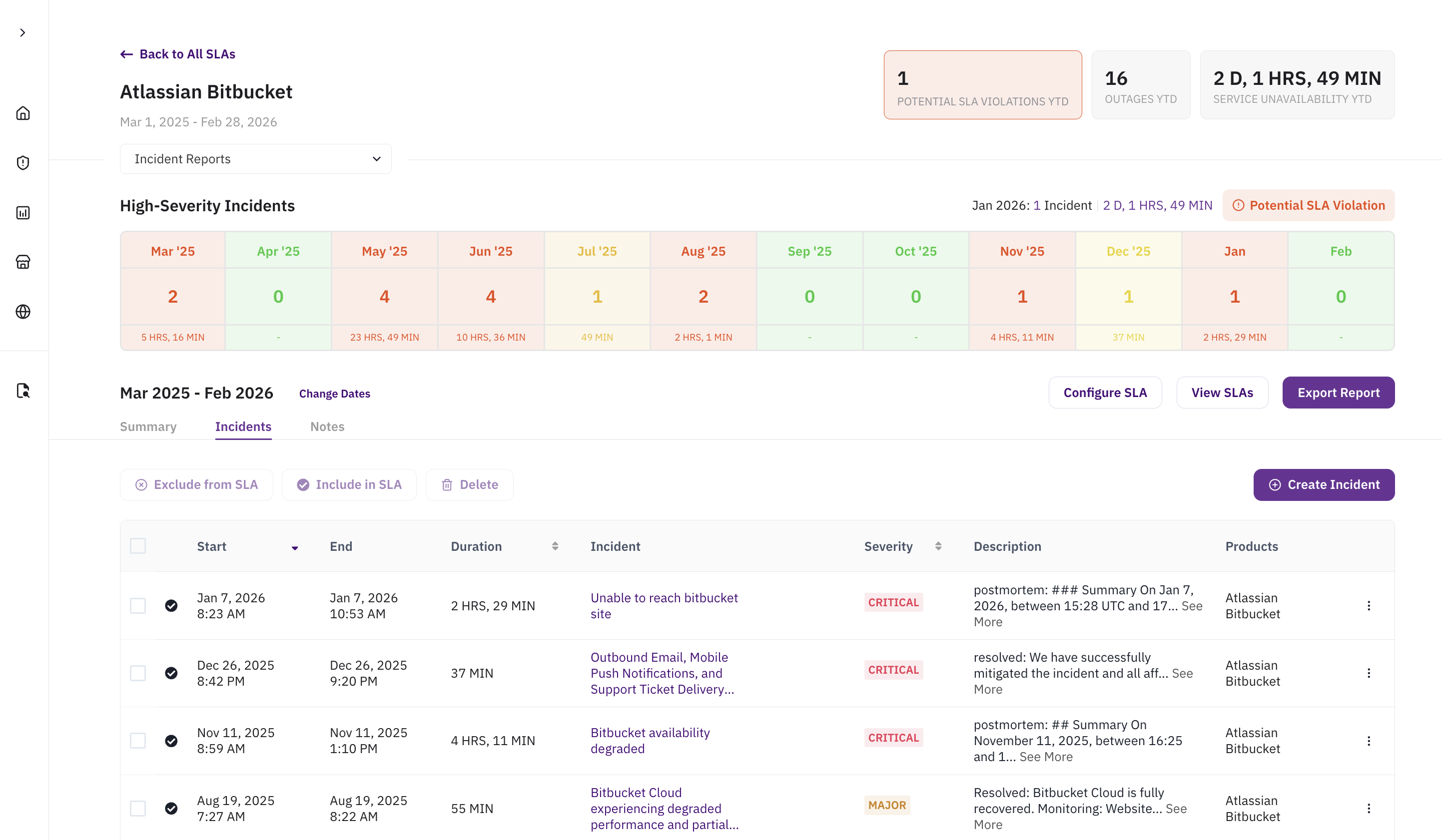
A vendor's incident page, which displays detailed lists of relevant incidents along with the linked source for verification
Through validation testing, Taylor discovered that "for the data populations that we've pulled, we've been able to confirm that data with our internal sources, and they have the same values. And so we were able to quickly shed that skepticism."
Implementation & Results

Immediate Value
"The rollout was very quick. The Clarative team was able to get everything up and running for us in a very short period of time."
The team saw value from day one: "We were able to immediately see value, especially on the sourcing side, when there were a couple very public outages that occurred. We were able to immediately look to the Clarative tool to see them reported and what the ultimate impact would be to the teams."

Quantifiable Time Savings
The transformation in reporting efficiency was dramatic.
"It's one person who can take an hour or two to pull the commentary together for our quarterly reports, where before, it was taking weeks in order to compile that information."
The impact was a 95%+ time reduction in quarterly reporting: from 3 weeks with 2 dedicated staff to 1-2 hours with 1 person.

Process and Control Improvement
For leadership, the value extended beyond efficiency.
"We're always focused on process improvement, but Clarative also gave us the angle of control improvement because now we're able to point to the source of the data, be able to tie it back to how it's being calculated, where it's being calculated from, without having to chase an internal team or have to build a separate model in the background internally."
"Not only have we been able to pull together the information more quickly, but it's also been in a more durable way."

