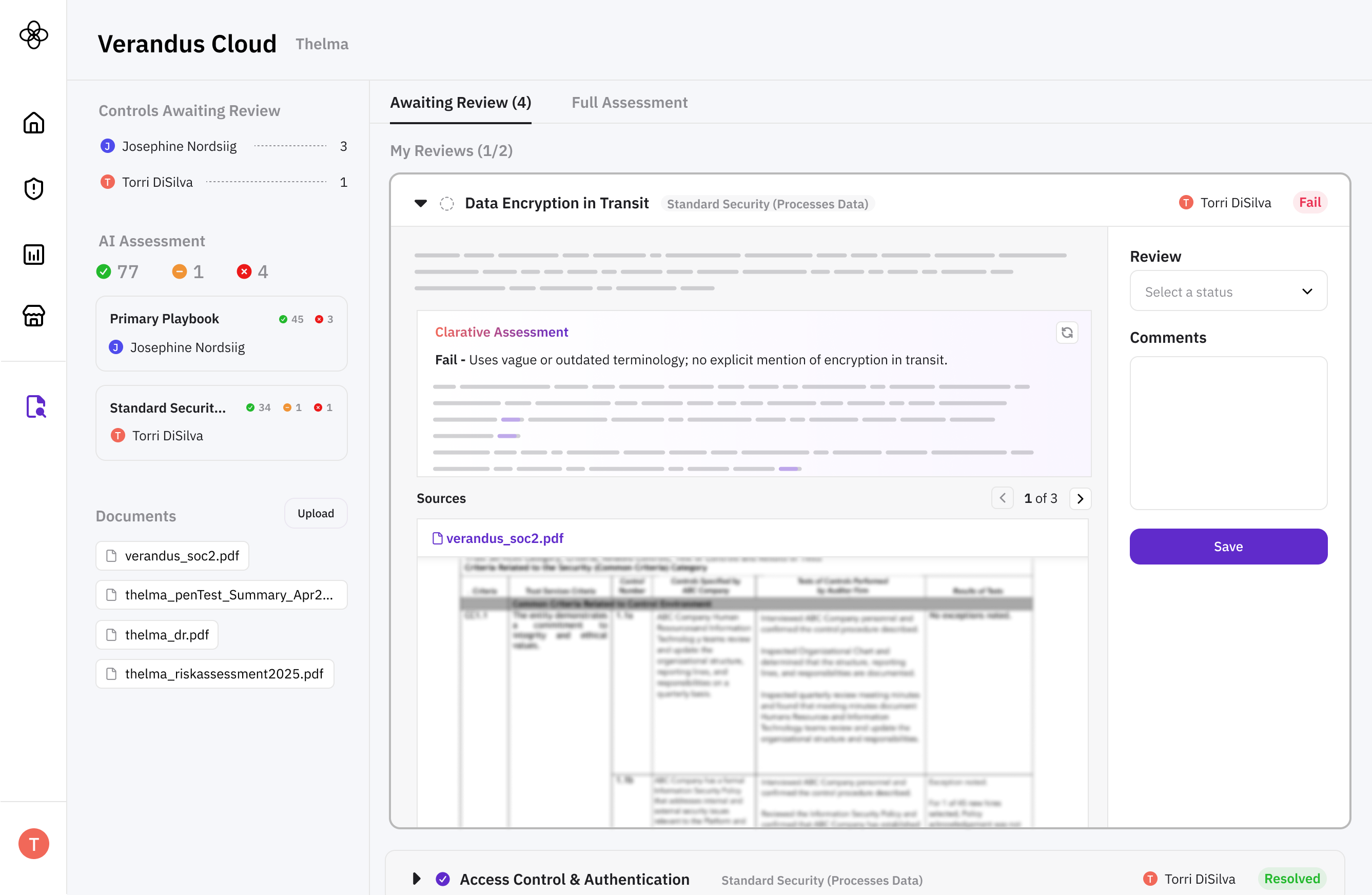
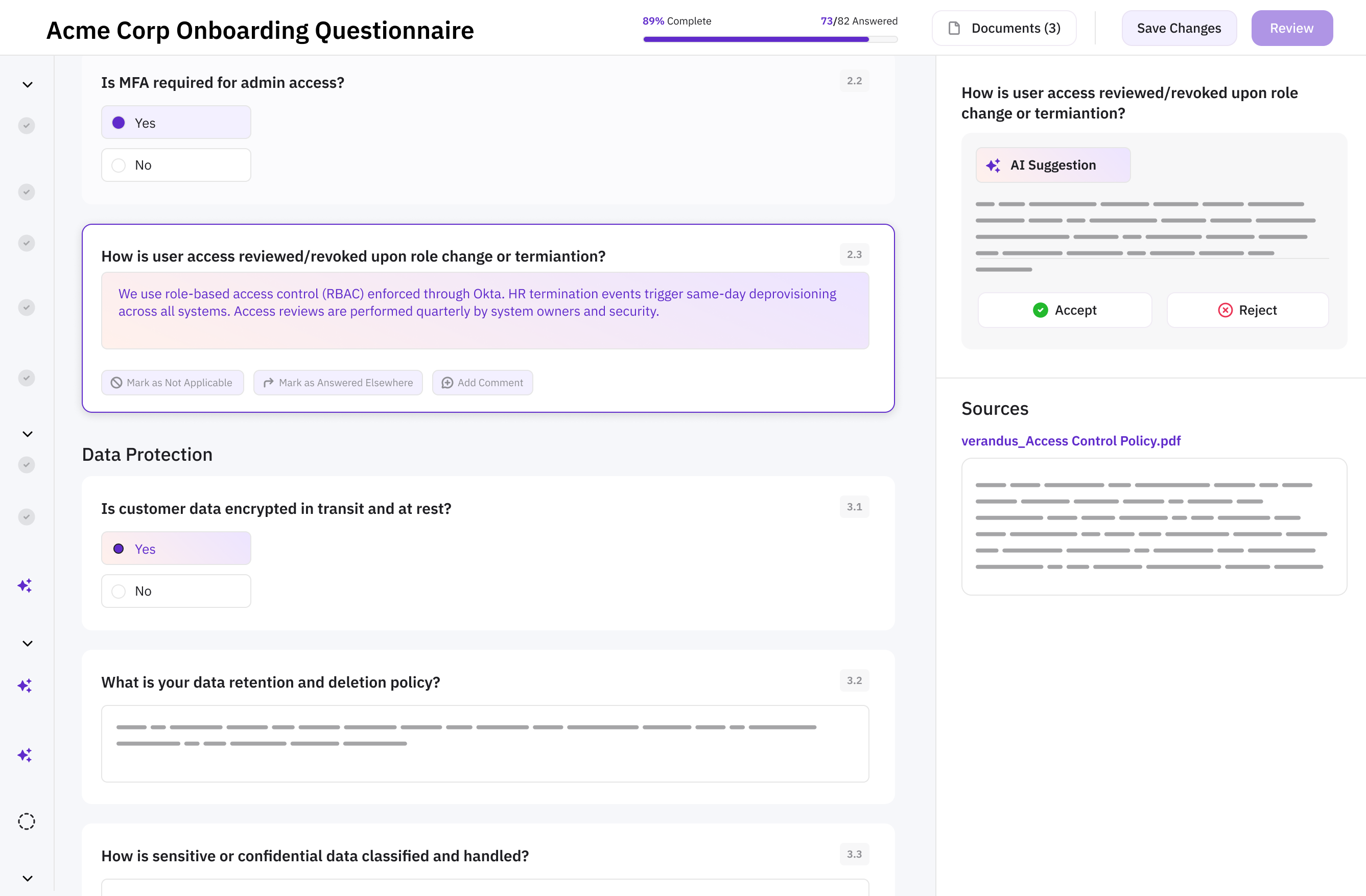
For Risk Professionals who need to onboard vendors quickly while maintaining rigorous standards, Clarative accelerates the entire due diligence process with AI-powered assessments, automated reviews, and instant operational risk insights.
The Challenge
Manual assessment bottlenecks Reviewing vendor questionnaires and documentation manually takes weeks, delayingcritical onboarding decisions and frustrating business stakeholders.
Resource constraints Small teams can't scale thorough due diligence as vendor portfolios expand, forcing impossible tradeoffs between speed and rigor.
Inconsistent evaluation standards Without standardized criteria, vendor assessments vary by analyst, creating compliance gaps, audit risk, and unfair vendor comparisons.
Operational risk blind spots Traditional due diligence focuses on policies and controls but misses real-world operational incidents that indicate actual vendor reliability.
"We spent hundreds of hours last year doing risk assessments. We're automating that away and reducing cycle time with Clarative."
Automatically evaluate vendor questionnaires, documentation, and evidence against defined requirements to eliminate manual review bottlenecks and ensure error-free compliance checking.
AI-Assisted Questionnaires
Pre-fill and quality-check vendor questionnaires using AI to dramatically reduce vendor back-and-forth and accelerate cycle times.
Instant Risk Reports
Generate on-demand operational risk reports using Clarative's proprietary incident database to assess vendor reliability before contracts are signed.
The Impact
Faster vendor onboarding Cut due diligence timelines from weeks to days with automated assessments and instant risk reports that eliminate manual bottlenecks.
Scale without adding headcount Handle growing vendor portfolios without expanding your team by automating repetitive review tasks and right-sizing assessments by risk level.
Consistent, audit-ready evaluations Standardize your assessment methodology with playbook templates and automated reviews that ensure compliance and eliminate subjective judgment calls.
Better risk visibility Assess operational risk that traditional methods miss by combining controls evaluation with real-world incident data and continuous monitoring.


.png)