.png)
As we close out 2025, many of us are thinking about the goals we set, the habits we stuck to, and the New Year’s resolutions we… didn’t quite nail. While we reflected on our own year-long commitments, we also took a step back and asked a different question:
How many of our vendors actually met their SLAs this year?
“The results might surprise you.” And no, this isn’t clickbait.
Most of us heard about the major Cloudflare outage in November. What’s often overlooked is how far the blast radius extended. Because so many vendors rely on Cloudflare for network reliability, many Clarative customers saw vendor SLAs impacted indirectly—even when the vendors themselves weren’t the ones having the incident.
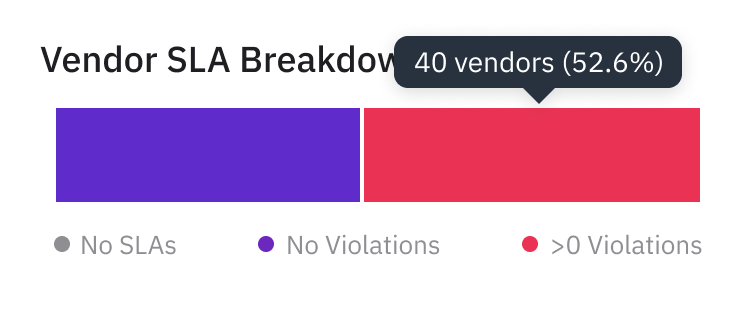
One company monitoring 76 vendors through Clarative saw 40 vendors with at least one potential SLA violation this year. That’s more than half, including some vendors with over 24 hours of downtime, elevated errors, and severe latency problems in a given month.
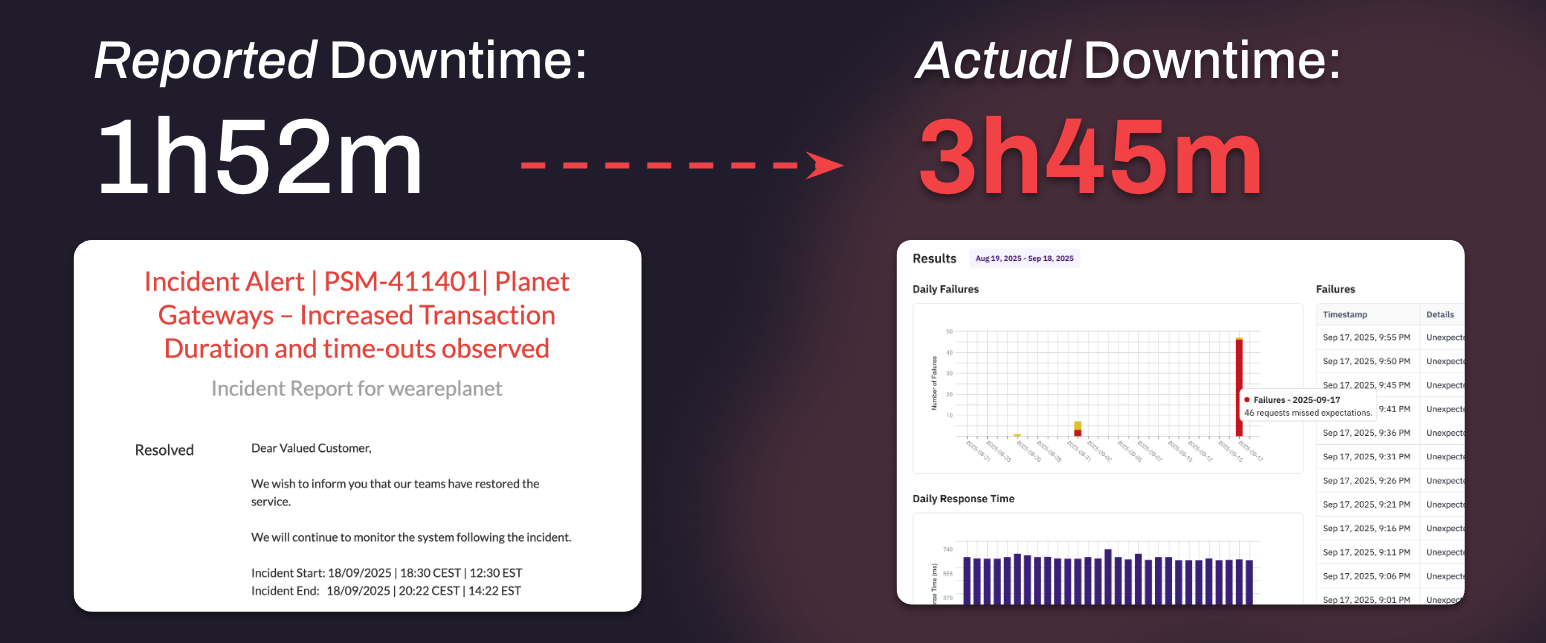
We’ve also seen that vendor-reported outage durations can be noticeably shorter than what is actually happening. Whether intentional or not, these discrepancies matter for contractual obligations. Clarative recently identified a payments vendor who under-reported an outage duration by 50%, which we were able to detect with our independent synthetic monitor (link to synthetic monitor article).
But how about those scenarios when a vendor is not fully violating their SLAs, but they’re certainly skirting the line - like when your resolution was to practice French every day, but you were actually using weekly Duolingo streak freezes to keep the counter alive.

The reality is simple: Continuous monitoring is no longer optional. Reliance on vendor-reported uptime alone won’t tell the full story, and waiting for quarterly business reviews means you’re already negotiating from behind.
At Clarative, we monitor more than 3,000 IT vendors—tracking both risk and performance in real time. We proactively ping vendor services to automate incident detection and ensure that vendor-reported outages are correct, and we detect real-time risk events like news, sanctions, and legal actions so that nothing slips through the cracks.
As you enter 2026 and sit down with your vendors, you’ll have the data you need to negotiate confidently and address recurring issues. Here’s to a new year with fewer Duolingo streak freezes, and vendors who stick to their resolutions for real.
Don't let vendor performance slip through the cracks in 2026. Get the real-time visibility you need to hold your vendors accountable.


